


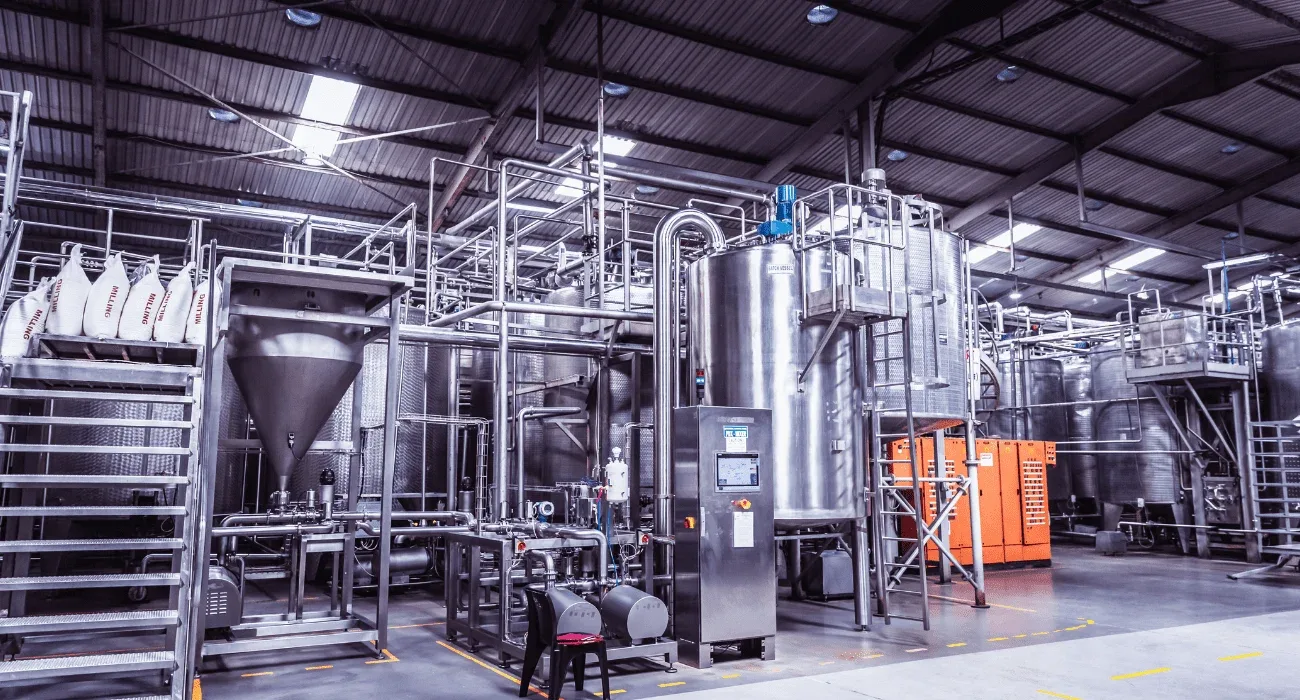
Walk through most industrial manufacturing facilities today, and you’ll find the same story told in fragments. A bulk handling system here. A control panel there. A separate software platform for production data. Another for maintenance tracking. And somewhere in the middle, a team of people manually bridging the gaps between all of them.
The Gaps Are Costing You More Than You Think
This fragmented approach isn’t just inefficient; it’s also ineffective and expensive. And for multi-plant operations, it’s quietly compounding into a serious competitive disadvantage.
But there’s some good news. You can close these gaps with end-to-end system integration, a custom solution that’s changing what’s possible for industrial manufacturers across the country.
What Does “End-to-End System Integration” Actually Mean?
The term is used often, but the meaning matters. Genuine system integration isn’t just connecting two pieces of equipment or linking a sensor to a dashboard. It means every component of your operation—mechanical equipment, electrical systems, process controls, automation logic, and data infrastructure—works together as a single, cohesive system.
Think of it as the difference between a relay race where each runner starts cold and a well-oiled machine where every handoff is automatic, precise, and swift.
For industrial manufacturers, a truly integrated system typically spans:
- Bulk material handling equipment—conveyors, feeders, elevators, and storage
- Weighing and batching systems—precision measurement tied directly to process controls
- Programmable Logic Controllers (PLCs) and HMIs—the nerve center of your automation layer
- SCADA and MES platforms—supervisory control and real-time production management
- ERP connectivity—linking operational data to business systems
When these layers communicate seamlessly, the result is an operation that responds faster, wastes less, and provides you with the visibility to make confident decisions—whether you’re on the plant floor or reviewing data from a corporate office three states away.
Why Manufacturers Are Prioritizing Integration Now
Several forces are converging to make system integration a top priority for plant leaders today.
- Labor challenges aren’t going away. Skilled operators are harder to find and retain. Integrated, automated systems reduce reliance on manual processes and enable your existing team to do more with less effort.
- Data is only valuable if you can use it. Most manufacturers generate enormous amounts of operational data, but without integration, it lives in silos—useful to no one. A connected system turns raw data into real-time insights.
- Downtime is the enemy of margins. Disconnected systems make it harder to predict failures, diagnose problems, and respond quickly. Integration enables predictive maintenance and faster troubleshooting, keeping production moving.
- Regulatory and quality requirements are tightening. Traceability, batch records, and audit trails are increasingly non-negotiable. Integrated systems make compliance documentation automatic, not an afterthought.
The Single-Source Advantage: Why It Matters Who Builds Your System
One of the most overlooked aspects of system integration is who designs and builds it.
Many manufacturers piece together systems from multiple vendors—one for the mechanical equipment, another for the controls, and a third for the software layer. On paper, it sounds flexible. In practice, it leads to finger-pointing, compatibility issues, and integration costs that never seem to end.
Working with a single-source partner who can engineer, build, and commission the entire system—from mechanical to software—eliminates friction. There’s one point of accountability. One team that understands how every component was designed to work together. And one path to support when something needs attention.
Magnum Systems delivers exactly this kind of single-source capability—from bulk material handling equipment and pneumatic conveying systems to precision weighing and batching solutions that integrate directly with your process controls.
Where Process Automation Takes Integration to the Next Level
Mechanical integration is only part of the story. The real transformation happens when physical systems connect to intelligent automation and control architecture—designed and programmed by specialists who understand both worlds.
Our CSIA-Certified Controls and Process Automation team specializes in creating this exact type of bridge. CSIA Certification is no small distinction. It means that systems are designed, documented, and supported in accordance with internationally recognized best practices for industrial control system integration.
This team designs and implements:
- Custom PLC and HMI programming tailored to your process requirements
- SCADA system architecture that gives supervisors real-time visibility across operations
- MES integration that connects production data directly to your business systems
- Network infrastructure designed for industrial environments—reliable, secure, and scalable
The result is a system in which a change in one area—a recipe adjustment, a batch weight, a process parameter—flows automatically through the entire operation without manual re-entry or the risk of human error.
What This Looks Like Across a Multi-Plant Operation
For companies managing multiple facilities, the stakes of system integration are even higher—and so are the rewards.
Imagine comparing production efficiency, material consumption, and equipment performance across all your plants from a single dashboard. Imagine standardizing automation logic across facilities so that best practices from one plant can be replicated in another without starting from scratch.
That’s not a distant possibility. It’s what manufacturers are achieving today through thoughtful, end-to-end system integration. Magnum’s complete system solutions are designed for multi-facility scalability, giving corporate operations teams the visibility and control they need without sacrificing the flexibility plant managers depend on.
Starting the Conversation: What to Look for in an Integration Partner
If you’re evaluating whether your operation is ready for deeper system integration or selecting a partner to help you get there, here are the questions worth asking:
- Do they design both the mechanical and the automation layers? If not, who manages the interface between them?
- Are their controls engineers CSIA-Certified? Certification signals both technical rigor and project management discipline.
- Can they provide references in your industry and application? Experience in your specific process matters more than general capability claims.
- What does ongoing support look like? Integration isn’t a one-time project — it evolves as your operation does.
- Do they offer remote monitoring and support? For multi-plant operators, this is increasingly essential.
Magnum Systems has built its reputation on being the partner that answers “yes” to all of the above. From initial engineering and design consultation through commissioning and long-term support, the goal is a system that performs as designed—and keeps performing.
The Bottom Line
System integration isn’t a luxury for large manufacturers or a project for next year’s budget cycle. It’s the foundation of a competitive, resilient, and scalable manufacturing operation—and the gap between integrated and fragmented operations is growing wider every year.
The manufacturers winning in today’s environment aren’t the ones with the most equipment. They’re the ones whose equipment, controls, and data all speak the same language.
Ready to see what end-to-end system integration could mean for your operation?
Contact Magnum’s talented team today to start a conversation about your facility’s specific challenges and goals. Whether you’re optimizing a single plant or standardizing across multiple facilities, we’re built to help you bridge the gap—from the mechanical to the digital, and everything in between.

Magnum Systems podcast series, AIM!
RELATED POSTS
CSIA-Certified Controls and Process Automation Team
How to Build a Phased Automation Roadmap When Downtime Is Not an Option