Expertise Engineering

Engineering

Engineering is how the system is designed to run as it should. Every decision shows up in how it performs.

Good engineering starts on paper, but it proves itself in how your system runs day after day.

From material flow to controls and automation, every part of your system is engineered to work together. Our customers benefit from deep engineering expertise and the precision that comes with end-to-end accountability.

We deliver tailored solutions to significantly enhance your business’s operations. Your operational success relies on precision-engineered systems that optimize performance, improve product efficiency, and drive cost-effectiveness. Whether it’s precise system sizing or implementing advanced automation, our highly skilled team’s meticulous process and in-depth technical expertise help you achieve extraordinary efficiency, reduced downtime, and optimized resource allocation.

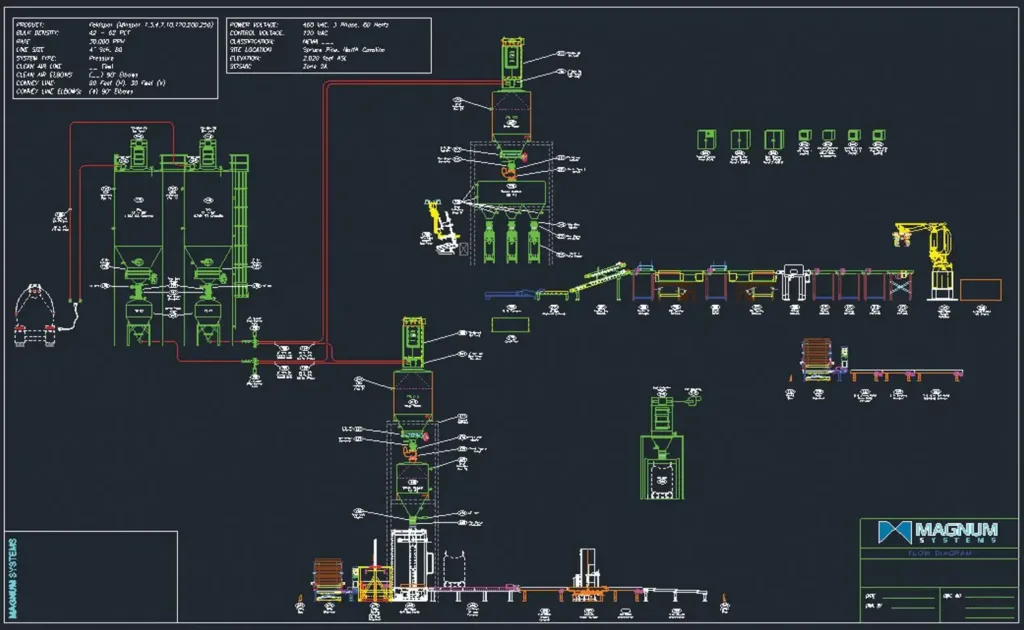
  • Magnum Systems CAD flow diagram of a pneumatic conveying and bagging line with silos, fillers, and palletizing.
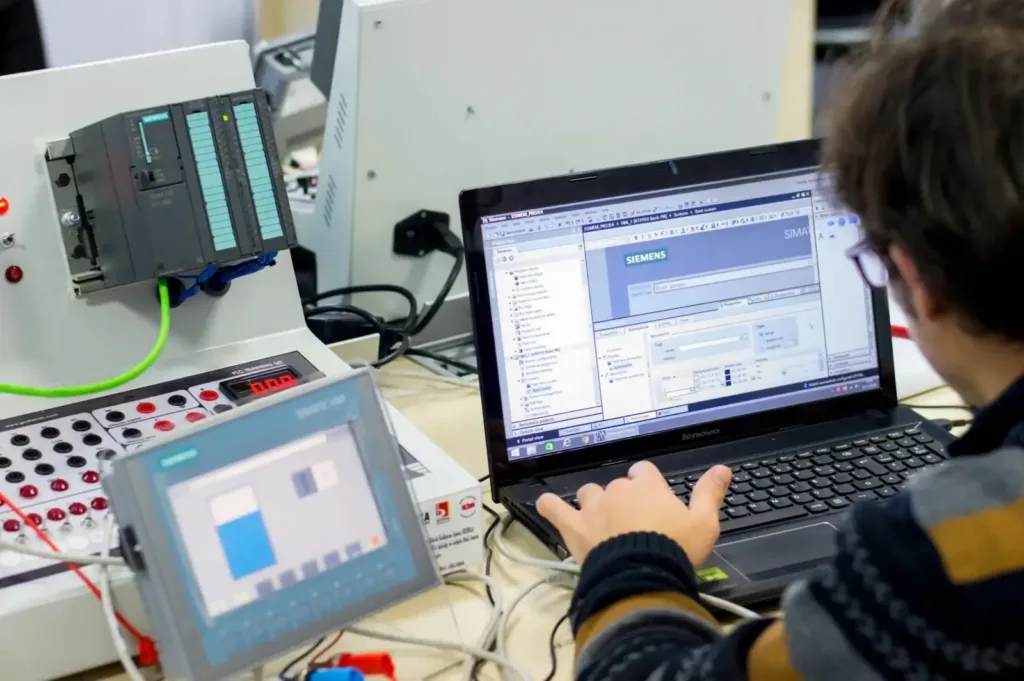
  • Engineer programs Siemens TIA Portal on a laptop beside a PLC training panel and SIMATIC HMI touchscreen.

Simulations also demonstrate the real benefits of your custom solution, including increased throughput, improved accuracy, and lower operational costs. This enables you to make informed decisions with a clear understanding of how your system will perform in real-world scenarios.

A Team of Experts By Your Side

With Magnum, you gain access to a cohesive team of industry-leading experts in application design, mechanical and electrical engineering, automation, and project management. Our end-to-end approach eliminates inefficiencies, ensures consistent operational accuracy, and future-proofs your business with a scalable, long-lasting operational solution.

Enhanced Capabilities for Next-Level Results

Eliminate pain points through comprehensive, end-to-end expertise. Magnum’s specialized knowledge allows us to provide solutions covering all aspects of system design and automation, such as:

  • Advanced System Modeling and Sizing: Optimize performance, resource utilization, and significant return on investment
  • Batch and Continuous Processing Integration: Minimize downtime while improving production accuracy and throughput
  • 3D Design and Facility Scanning: Generate detailed visualizations for more precise planning and execution
  • Process Automation Expertise: Achieve superior efficiency with cutting-edge technologies in batch automation and process control, increasing output and reducing costs


How they can engineer and program to make those settings work on a day-to-day basis for us promptly, and just extremely knowledgeable on their equipment and how well they could install it.”

— Cody Jensen, Senior Manager of Blending, BioZyme Incorporated

Explore More To Run Better

See how the right engineering decisions carried through to better system performance.

Market-Leading Insights

Learn more about how getting the engineering right makes a difference.

More Success Stories

Find out how engineering decisions showed up once the system was running.

Request a Proposal

Have system challenge you need to work through? Let’s look at what’s happening and how it should be designed.

Related News & Resources

Nemo enim ipsam voluptatem quia voluptas sit aspernatur aut odit aut fugit, sed quia.

An operator works at a workstation with four computer monitors displaying control panel interfaces and data dashboards in a monitoring room.

Building Cyber-Resilient Process Control Systems: 9 Practical Steps to Protect Your Digital Investments

A single cyberattack can halt production, corrupt data, and cost you days of lost output. That’s why more plant leaders are asking the same question: how do we build cyber-resilient process control systems that reduce the risk of downtime and keep operations running? The good news is that resilience isn’t luck. It’s a disciplined, repeatable process you can start today. Why Cyber Resilience Matters Now Your plant floor runs on connected technology. PLCs, HMIs, SCADA platforms, and networked instrumentation communicate with each other and with your business systems. That connectivity drives efficiency, but it also expands your attack surface. For decision-makers, the …
Continue Reading 
A light-skinned man wearing a white hardhat and reflective vest points with a pen at multiple computer screens showing data and charts in a control room.

The Competitive Edge You’re Missing: Why Controls Integration and System Integration Are Better Together

Running a plant, or multiple plants, means managing a web of moving parts. Equipment communicates with software. Software talks to operators. Operators make timely decisions based on data they are confident is accurate and available in real time. But when your systems aren’t truly unified, the web quickly frays. This is why it is critical to understand the difference between system integration and controls integration—and, more importantly, why combining them is a game-changer for operational leaders like you. What Is System Integration? System integration is the process of connecting your disparate IT and OT (operational technology) platforms into a single, cohesive …
Continue Reading 
Get Started