Expertise Integrated Systems

Integrated Systems

We’re built to design and deliver integrated systems that connect every part of your operation, helping it run better.

Integration is what makes systems work together, not in pieces.

We bring together conveying, processing, packaging, and automation into a single connected system.

ERP Integration

Organizations that integrate Enterprise Resource Planning (ERP) with production planning achieve significant efficiency gains. Integration can take various forms, using trusted, secure technologies.

Four basic questions:

  • What needs to be made?
  • What resources (materials) are available?
  • What has already been made?
  • What resources have been consumed?
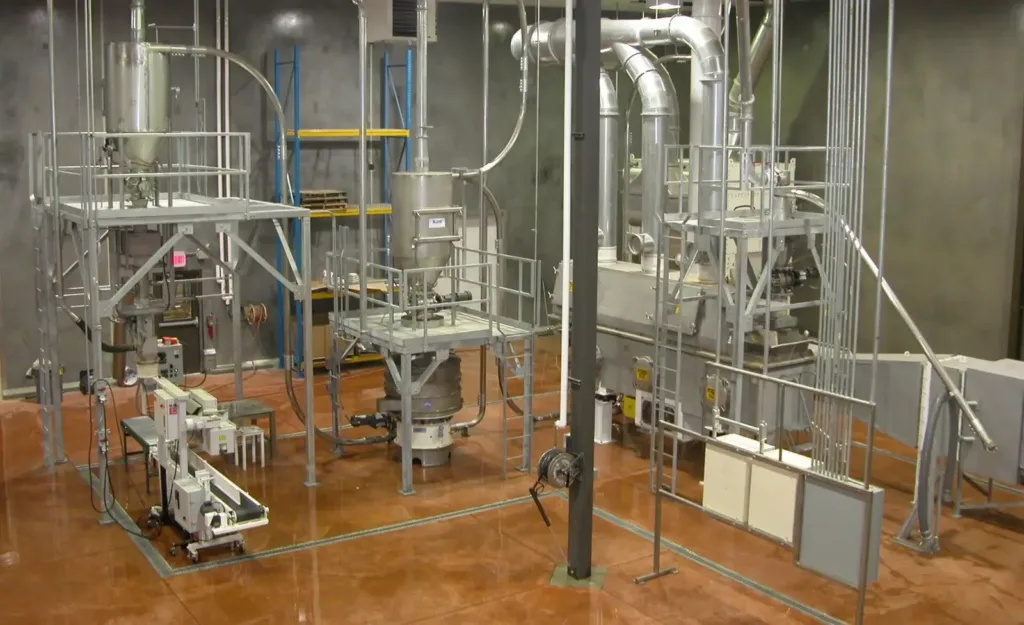
  • Pneumatic conveying system with elevated hoppers, a rotary sifter, and platforms on a polished brown floor.
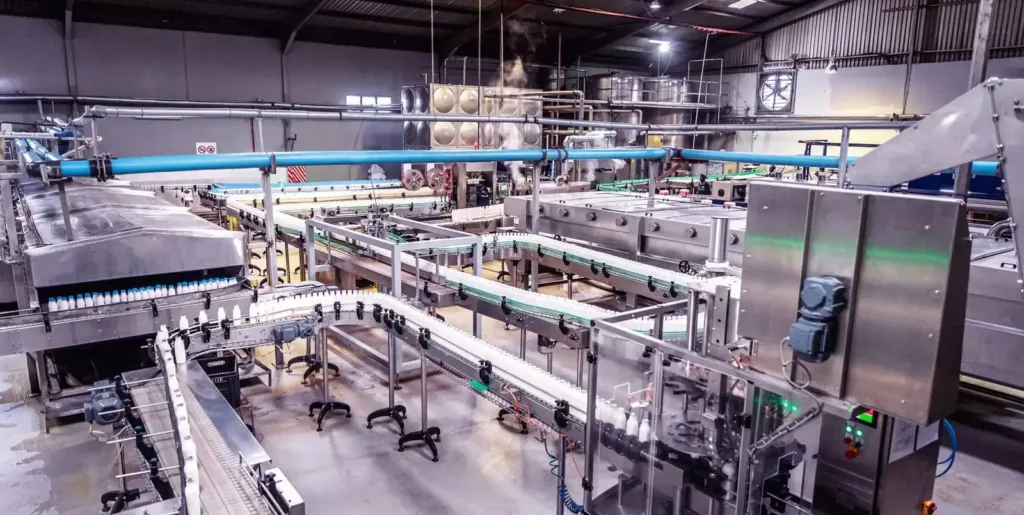
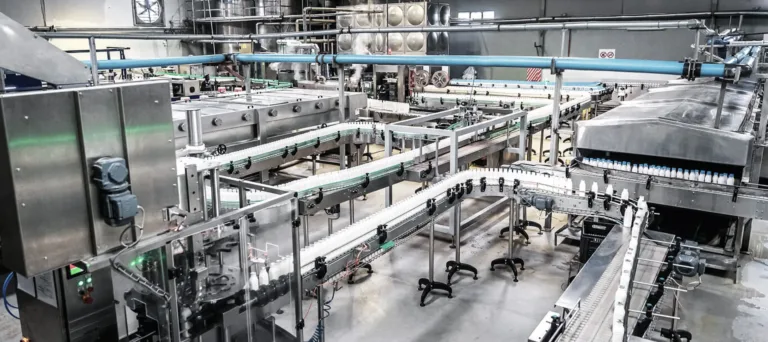
  • Winding conveyor lines carry white bottles through a bottling plant with overhead blue piping.
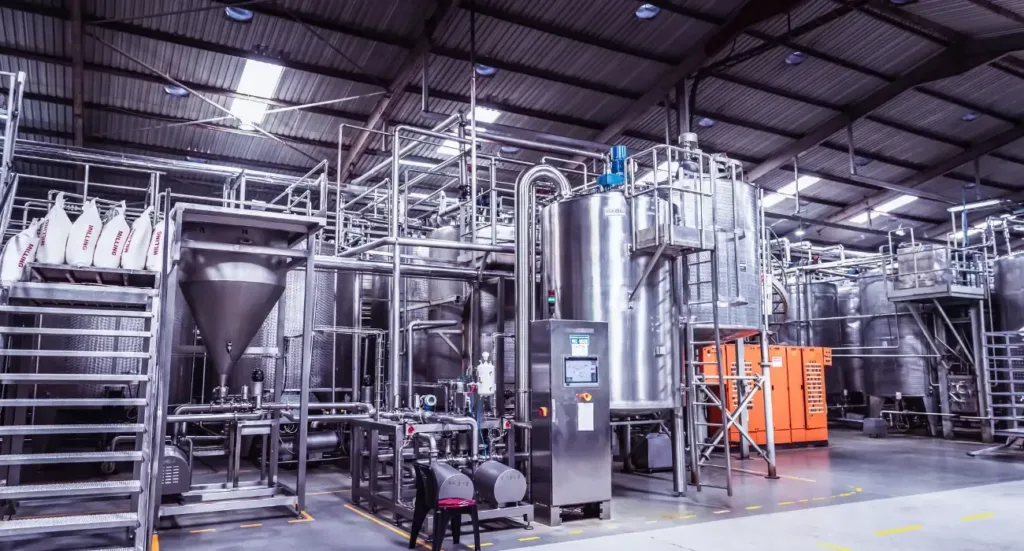
  • Stainless steel tanks, a cone hopper, and bags on a mezzanine platform beside orange electrical cabinets.
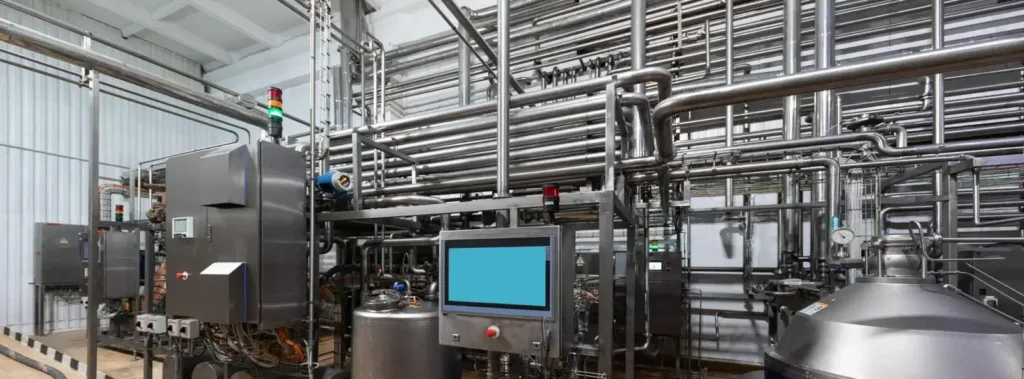
  • Dense stainless piping surrounds a process skid with a teal-screen HMI panel and stack lights.

Generally, the first two questions are answered by the ERP system, and the remaining two by the production planning and batch management system.

After security, which is paramount, an integration must consider timeliness. Production systems are near real-time. An operator scheduling batches needs to know nearly immediately whether resources are available. Conversely, ERP solutions are satisfied with being five minutes behind real-time, an eternity on the plant floor.

Caching transactions can be extremely important. Internet service providers, on which WANs depend, are not 100% reliable. One of our client’s facilities operated with minimal interruption for three days, using stale inventory data and telephoned production orders, while caching transactions for raw goods consumed and finished goods produced.

Whatever technology ultimately supports the integration, it is best to start with a detailed integration plan that defines each data column for every transaction. Such a plan not only guides development but also precisely documents the integration, benefiting future additions or modifications.


Magnum provided a total solution for us from the start of the plant to the warehouse, (as well as) all the equipment and all the engineering needed to complete our process. Magnum was with us step by step, revision through revision, ensuring us they could fill our needs as a company.

— Chris Gentry, Engineering Manager, The Quartz Corporation
Chris Gentry, Engineering Manager

Explore More To Run Better

See how integrated systems connect across operations so they perform as one.

Market-Leading Insights

Discover what it takes to connect systems and what makes integration vital to running better.

More Success Stories

See how our integrated systems have improved performance in the real world.

Request a Proposal

Looking to bring everything together? Let’s get together and do what it takes to integrate things the right way..

Related News & Resources

What goes in to connecting everything and making it work together.

An operator works at a workstation with four computer monitors displaying control panel interfaces and data dashboards in a monitoring room.

Building Cyber-Resilient Process Control Systems: 9 Practical Steps to Protect Your Digital Investments

A single cyberattack can halt production, corrupt data, and cost you days of lost output. That’s why more plant leaders are asking the same question: how do we build cyber-resilient process control systems that reduce the risk of downtime and keep operations running? The good news is that resilience isn’t luck. It’s a disciplined, repeatable process you can start today. Why Cyber Resilience Matters Now Your plant floor runs on connected technology. PLCs, HMIs, SCADA platforms, and networked instrumentation communicate with each other and with your business systems. That connectivity drives efficiency, but it also expands your attack surface. For decision-makers, the …
Continue Reading 
A light-skinned man wearing a white hardhat and reflective vest points with a pen at multiple computer screens showing data and charts in a control room.

The Competitive Edge You’re Missing: Why Controls Integration and System Integration Are Better Together

Running a plant, or multiple plants, means managing a web of moving parts. Equipment communicates with software. Software talks to operators. Operators make timely decisions based on data they are confident is accurate and available in real time. But when your systems aren’t truly unified, the web quickly frays. This is why it is critical to understand the difference between system integration and controls integration—and, more importantly, why combining them is a game-changer for operational leaders like you. What Is System Integration? System integration is the process of connecting your disparate IT and OT (operational technology) platforms into a single, cohesive …
Continue Reading 
Get Started