




Solutions Pneumatic Conveying Systems

Moving material isn’t as simple as it looks. How it’s conveyed impacts everything downstream.

We design and build pneumatic conveying systems that move material cleanly, efficiently, and without damage.

Every material behaves differently. Your system needs to account for that.

From abrasive powders to fragile products, conveying systems are designed to protect material integrity while keeping production flowing.

Airflow, velocity, and system layout are all tuned to the application.

Maintaining Integrated Systems
165 +

YEARS

Over a century of engineering, automation, and system integration expertise driving manufacturing transformation.

15,000 +

PROJECTS

Magnum Systems’ track record of delivering high-performance automation solutions for bulk material handling and packaging.

60,000 +

SQ. FT.

Our in-house manufacturing capacity keeps fabrication, assembly, and testing under one roof, ensuring a single standard of quality.

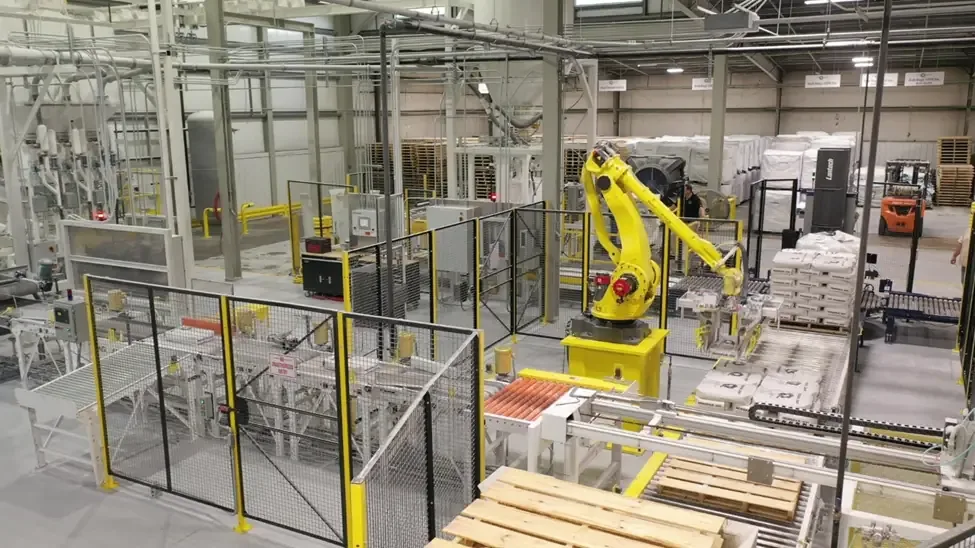
Yellow robotic palletizer stacks white bags on conveyors inside a safety-fenced warehouse cell.

The Quartz Corp

Quartz Corp needed a better way to move and package abrasive feldspar, so together, we built one that automated the entire process and reduced waste without sacrificing material purity.

Quote icon.

“We feel like we have a world-class production line that we can provide a world-class product.”

– Chris Gentry, Engineering Manager, The Quartz Corporation

Customer logo

Explore More To Run Better

See how conveying systems connect to packaging, processing, and overall system performance.

Market-Leading Insights

Understand how conveying systems succeed or struggle and what makes the difference.

More Success Stories

How different materials were conveyed and what changed to get it right. See more projects where pneumatic conveying helped move difficult materials cleaner, faster, and with greater control.

Request a Proposal

Working through a conveying challenge? Let’s talk about your material, the process, and the best way to convey it.

Related News & Resources

What affects conveying performance and how systems are designed for real materials.

An operator works at a workstation with four computer monitors displaying control panel interfaces and data dashboards in a monitoring room.

Building Cyber-Resilient Process Control Systems: 9 Practical Steps to Protect Your Digital Investments

A single cyberattack can halt production, corrupt data, and cost you days of lost output. That’s why more plant leaders are asking the same question: how do we build cyber-resilient process control systems that reduce the risk of downtime and keep operations running? The good news is that resilience isn’t luck. It’s a disciplined, repeatable process you can start today. Why Cyber Resilience Matters Now Your plant floor runs on connected technology. PLCs, HMIs, SCADA platforms, and networked instrumentation communicate with each other and with your business systems. That connectivity drives efficiency, but it also expands your attack surface. For decision-makers, the …
Continue Reading 
A light-skinned man wearing a white hardhat and reflective vest points with a pen at multiple computer screens showing data and charts in a control room.

The Competitive Edge You’re Missing: Why Controls Integration and System Integration Are Better Together

Running a plant, or multiple plants, means managing a web of moving parts. Equipment communicates with software. Software talks to operators. Operators make timely decisions based on data they are confident is accurate and available in real time. But when your systems aren’t truly unified, the web quickly frays. This is why it is critical to understand the difference between system integration and controls integration—and, more importantly, why combining them is a game-changer for operational leaders like you. What Is System Integration? System integration is the process of connecting your disparate IT and OT (operational technology) platforms into a single, cohesive …
Continue Reading 
Get Started